(English and Deutsch below)
Suomeksi
Piirakka-teossarjani on osa pitkäaikaista taiteellista tutkimustani siitä, miten kansanperinne, myytit ja kulttuurinen muisti muovaavat käsitystämme naisen kehosta ja sen suhteesta luontoon. Minua kiinnostaa erityisesti se, kuinka vanhat uskomukset jäävät elämään kieleen, eleisiin, esineisiin ja arkisiin rituaaleihin, usein huumorin tai käsityöperinteen kautta.
Suomalaisessa kansanuskossa vulva ei ollut ensisijaisesti seksuaalisuuden symboli vaan elämän, suojelun ja muutoksen paikka, osa villiä metsäluontoa kuten naisen keho kokonaisuudessaan. Se oli portti maailmojen välillä, yhtä aikaa pelätty, kunnioitettu ja pyhä. Sen ajateltiin olevan yhteydessä metsään, hedelmällisyyteen, näkymättömiin voimiin ja luonnon kiertokulkuun.
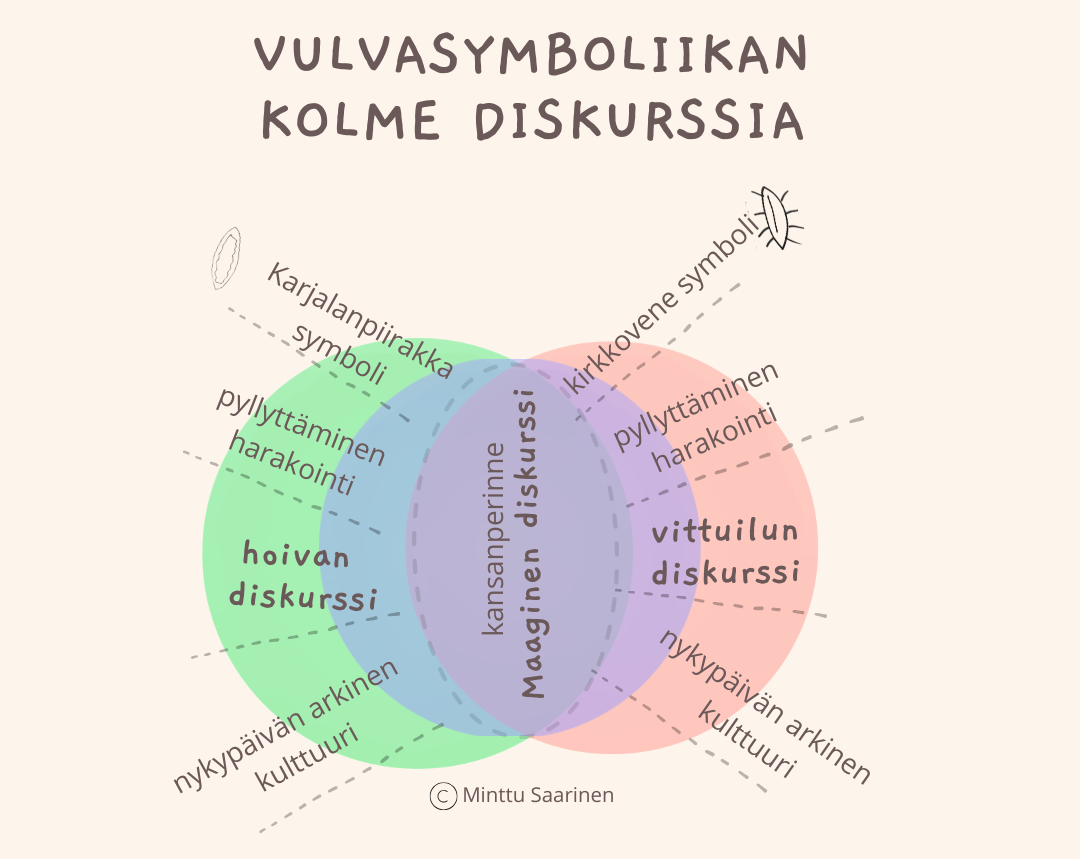
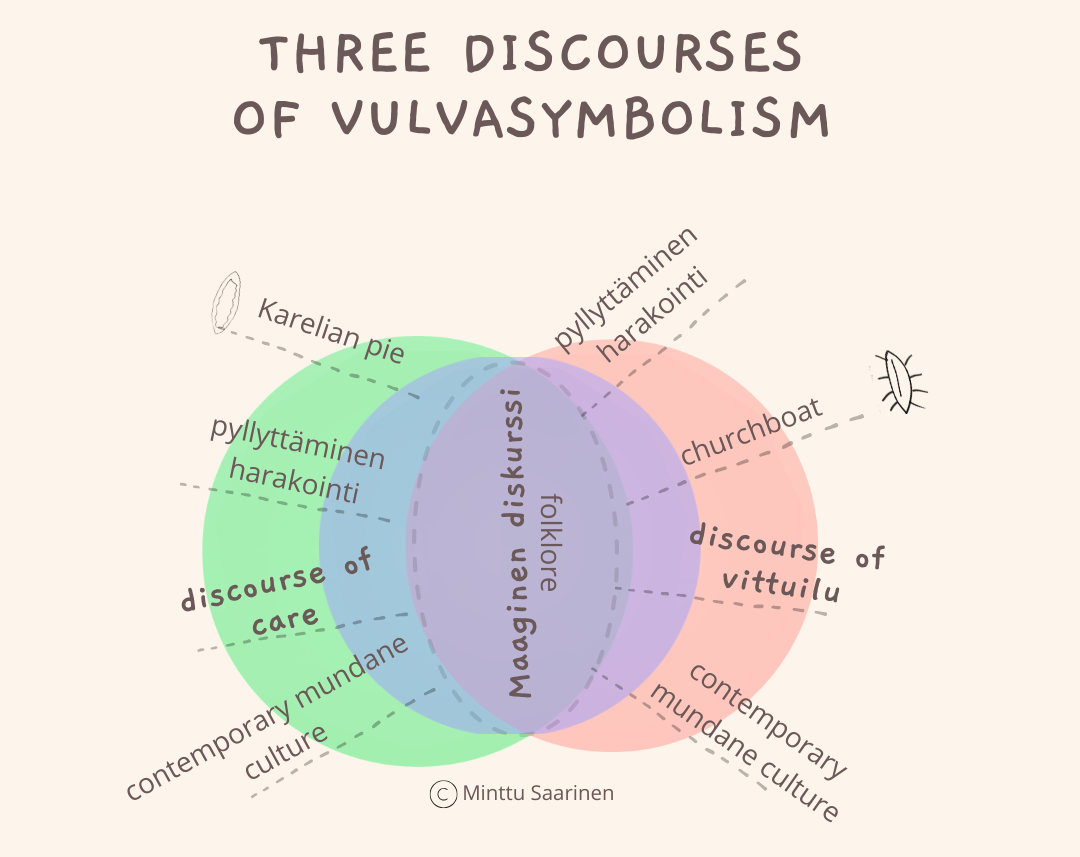
Tämä ajattelu näkyi monissa kansanperinteen rituaaleissa. Harakoinnissa ihmisiä ja eläimiä kuljetettiin naisen haarojen välistä suojeluksen toivossa, ja pyllyttämisessä metsälle tai uhkaavalle voimalle näytetty vulva toi suojelua. Naisen kehon uskottiin voivan vaikuttaa ympäristöönsä konkreettisesti taikavoimiensa avulla.
Karjalanpiirakka on yksi hienovaraisimmista suomalaisista vulvasymboleista. Karjalanpiirakan pehmeä keskusta, poimutettu reuna ja sukupolvelta toiselle siirtyvä valmistamisen tapa kantavat mukanaan naisten työtä, huolenpitoa, yhteisöllisyyttä ja kehollista tietoa. Minua kiehtoo ajatus siitä, että yksi arkisimmista ruoistamme voi samalla kantaa mukanaan kerroksia kansanuskosta ja muinaisesta maailmankuvasta.
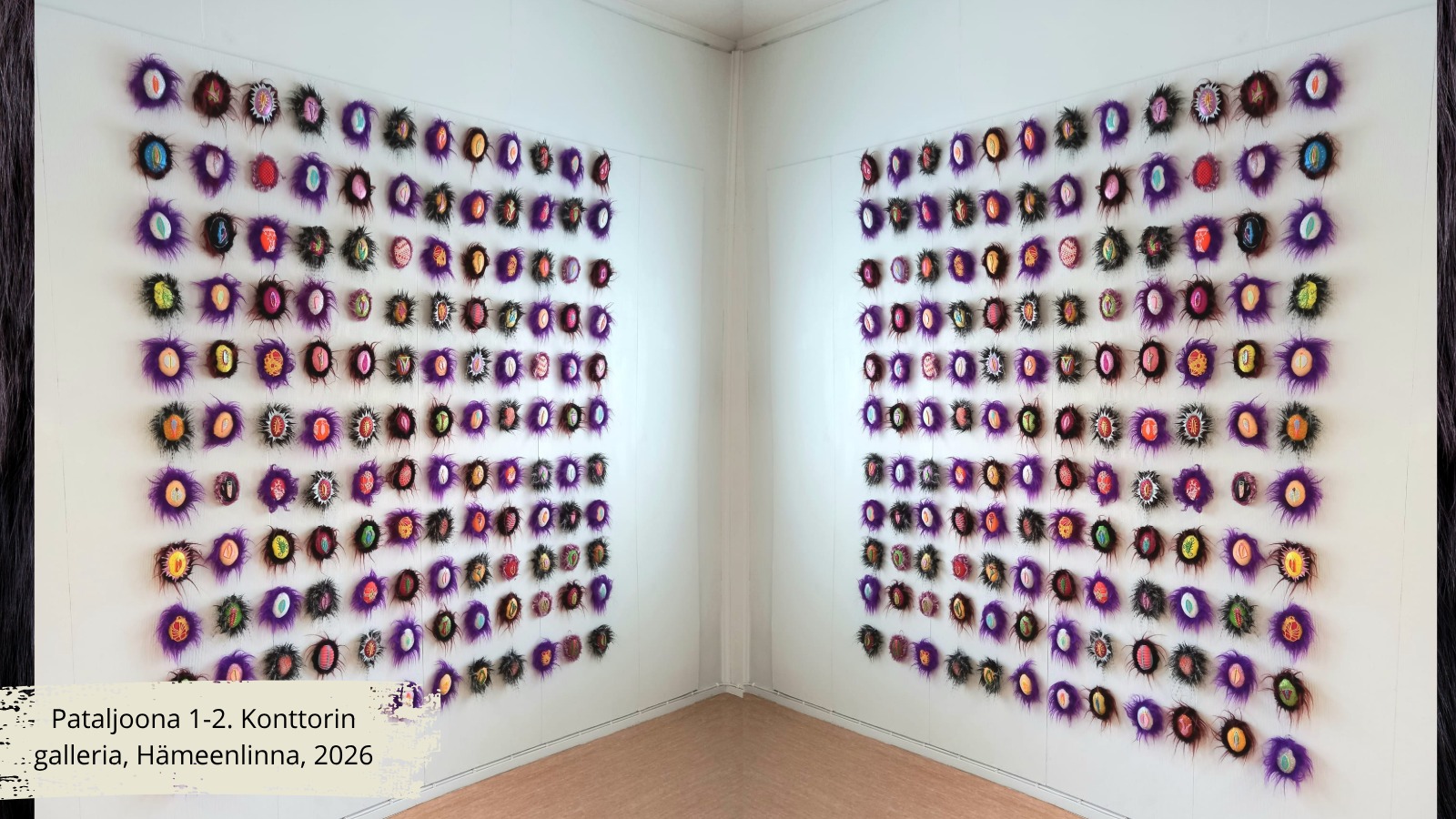
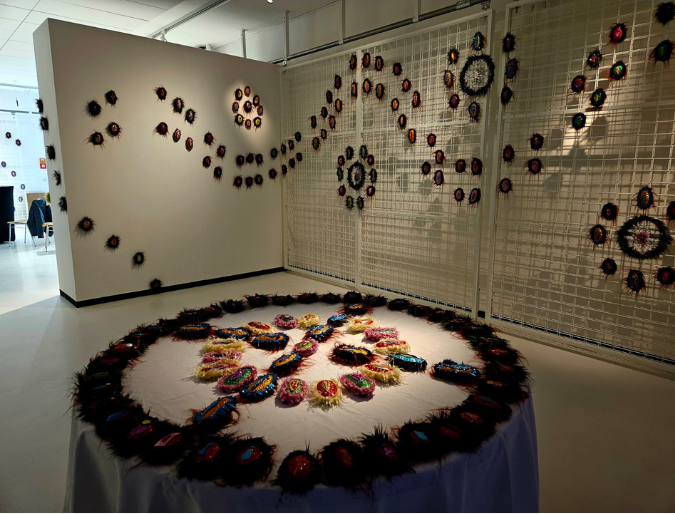
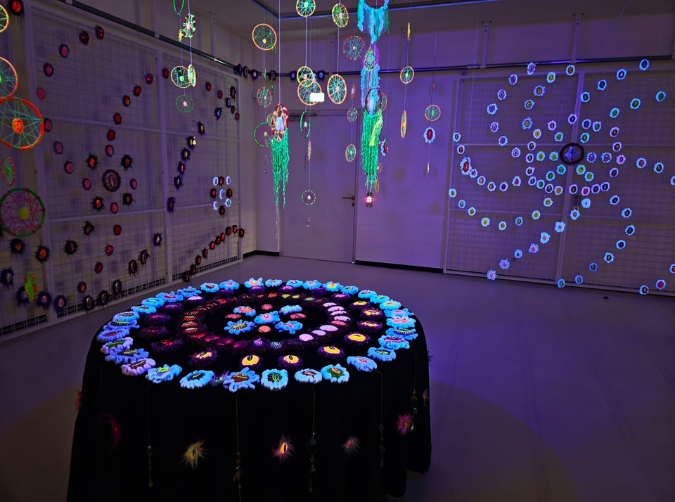
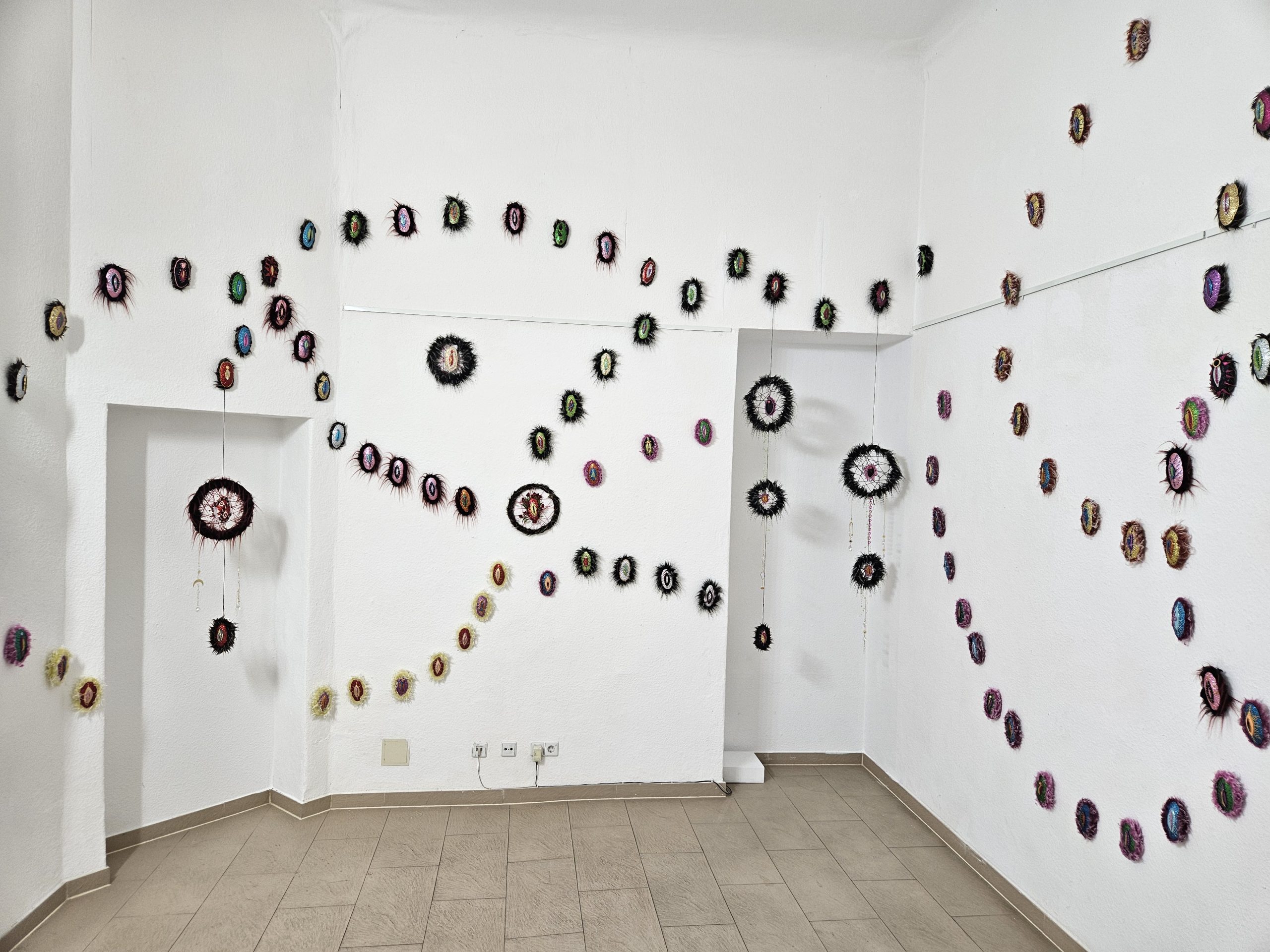
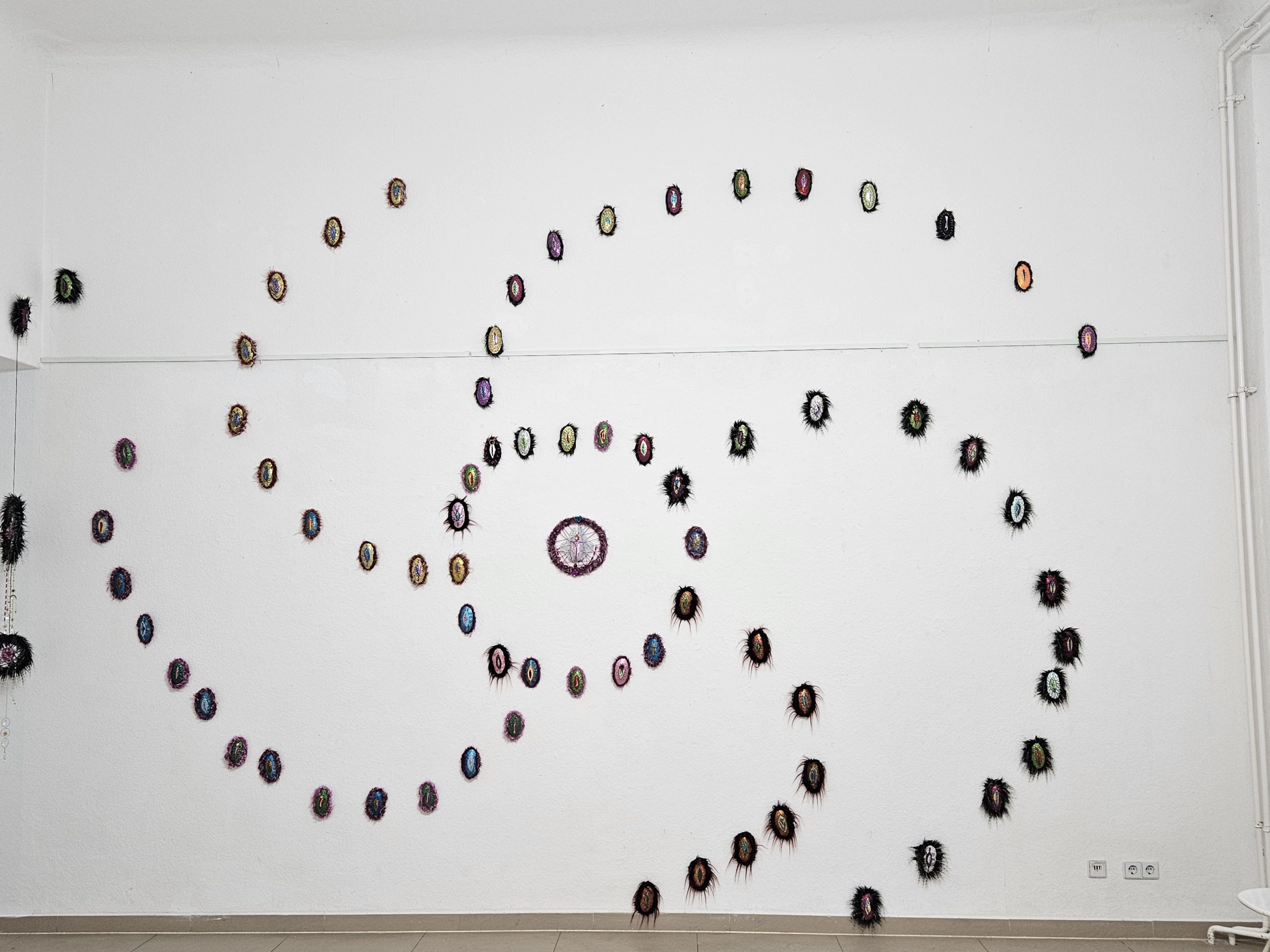
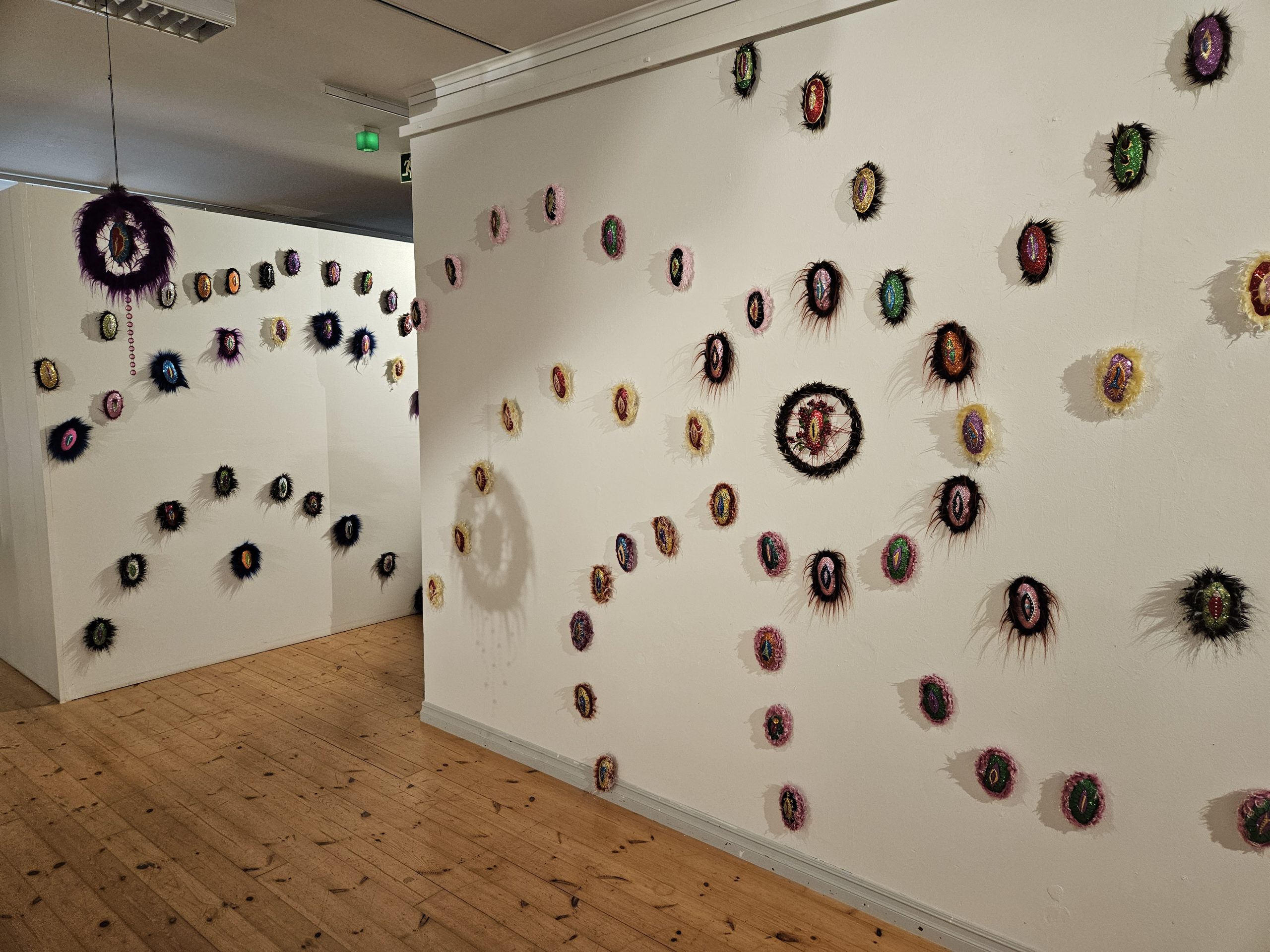
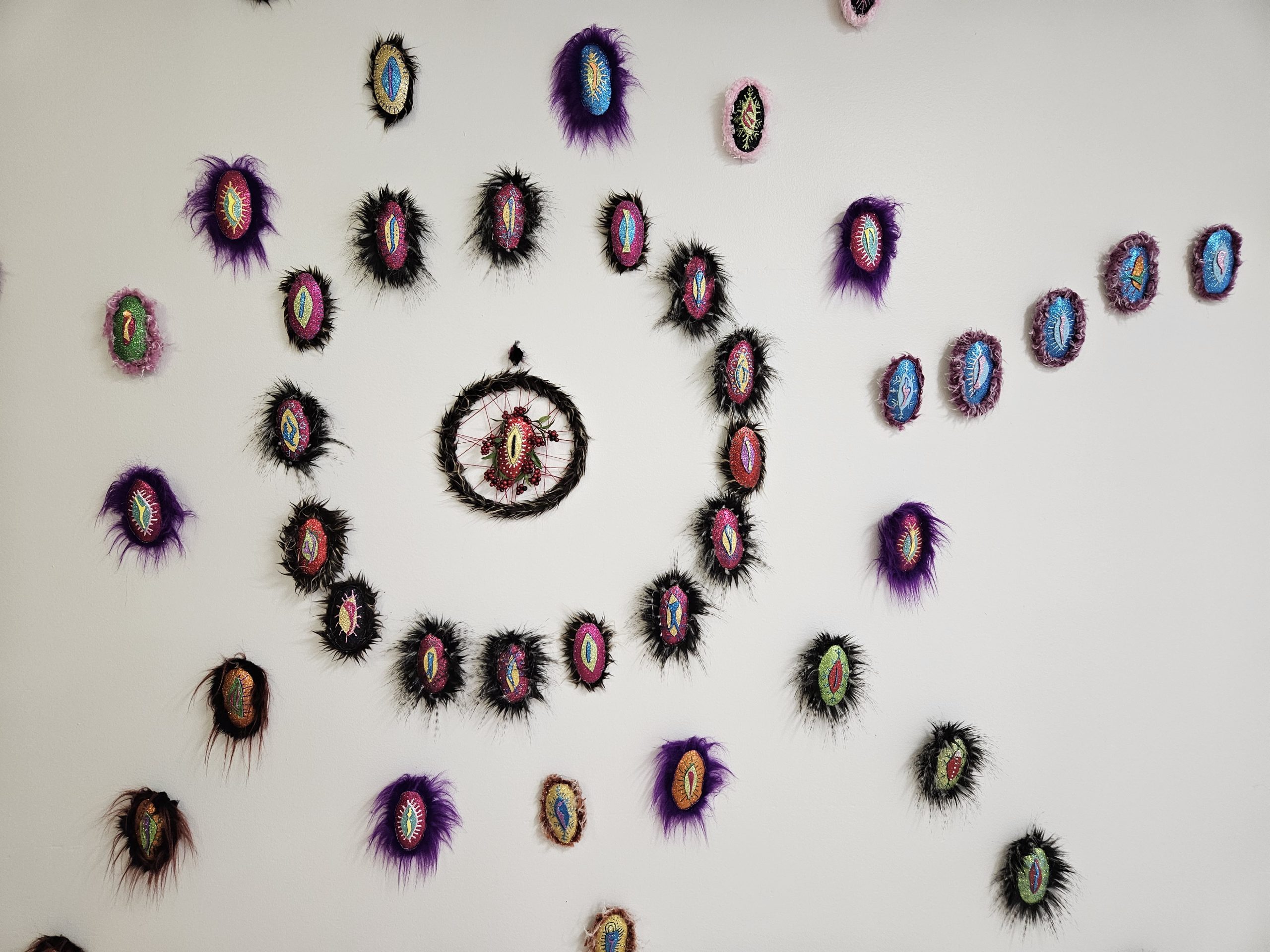
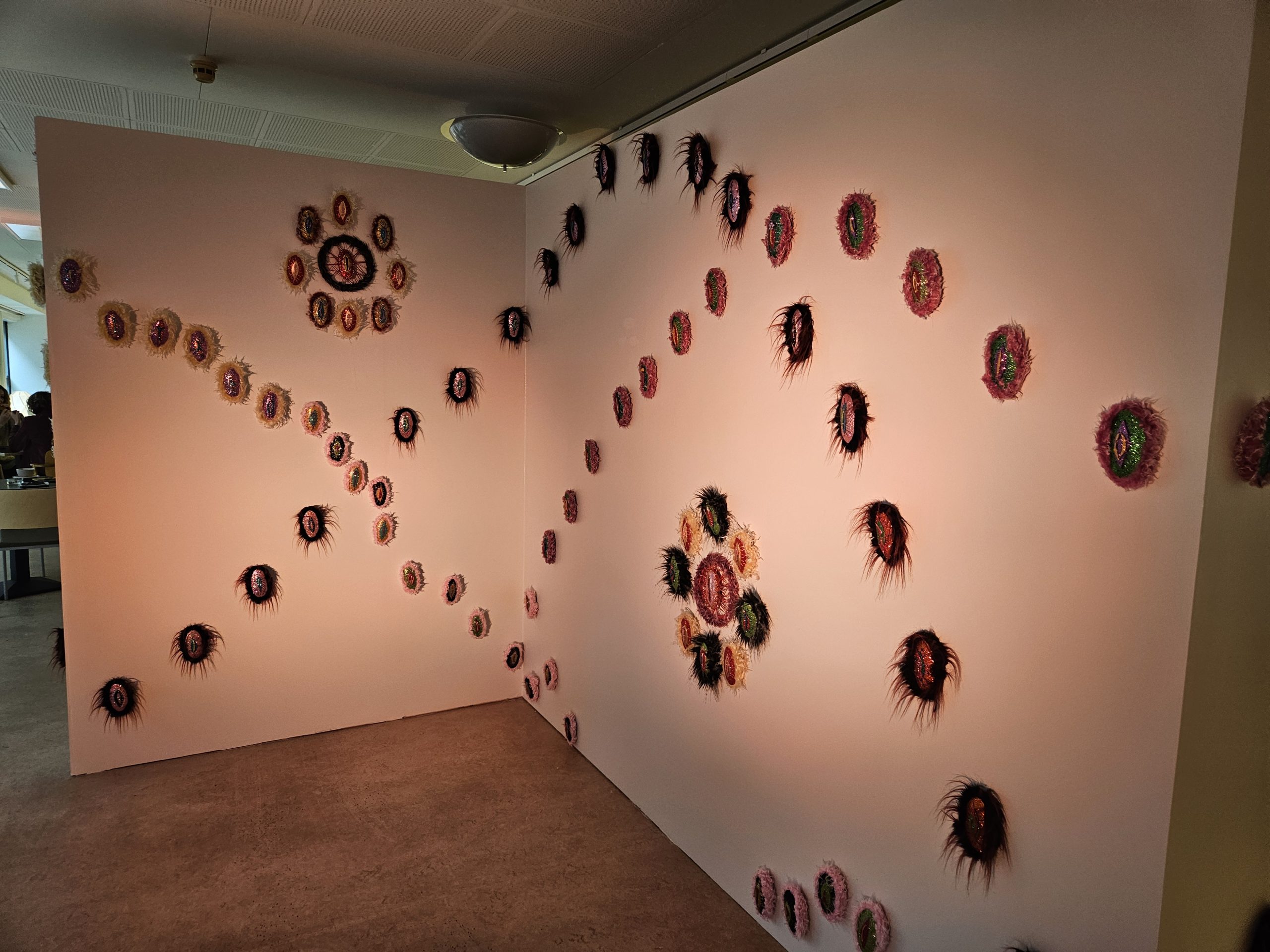
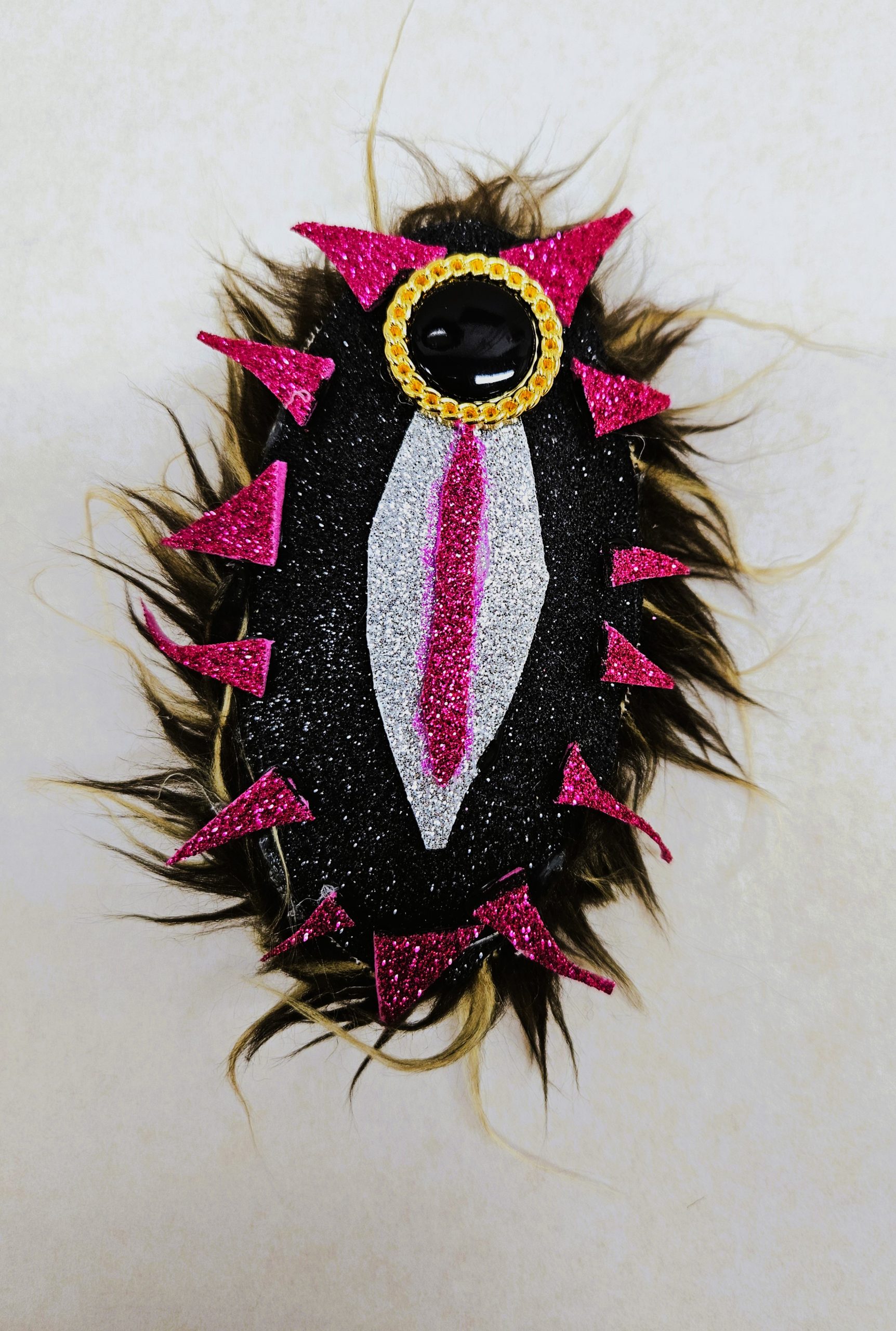
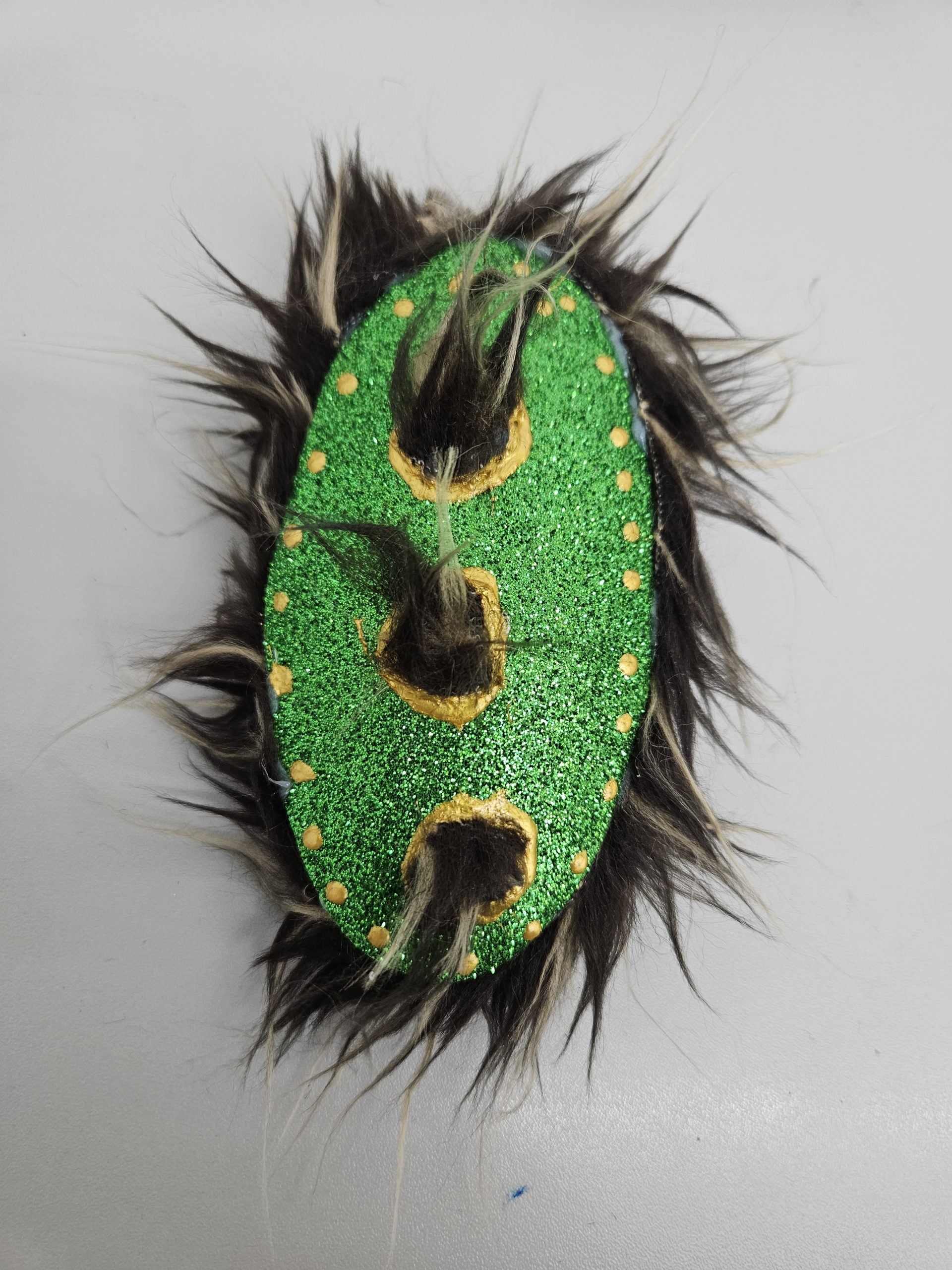
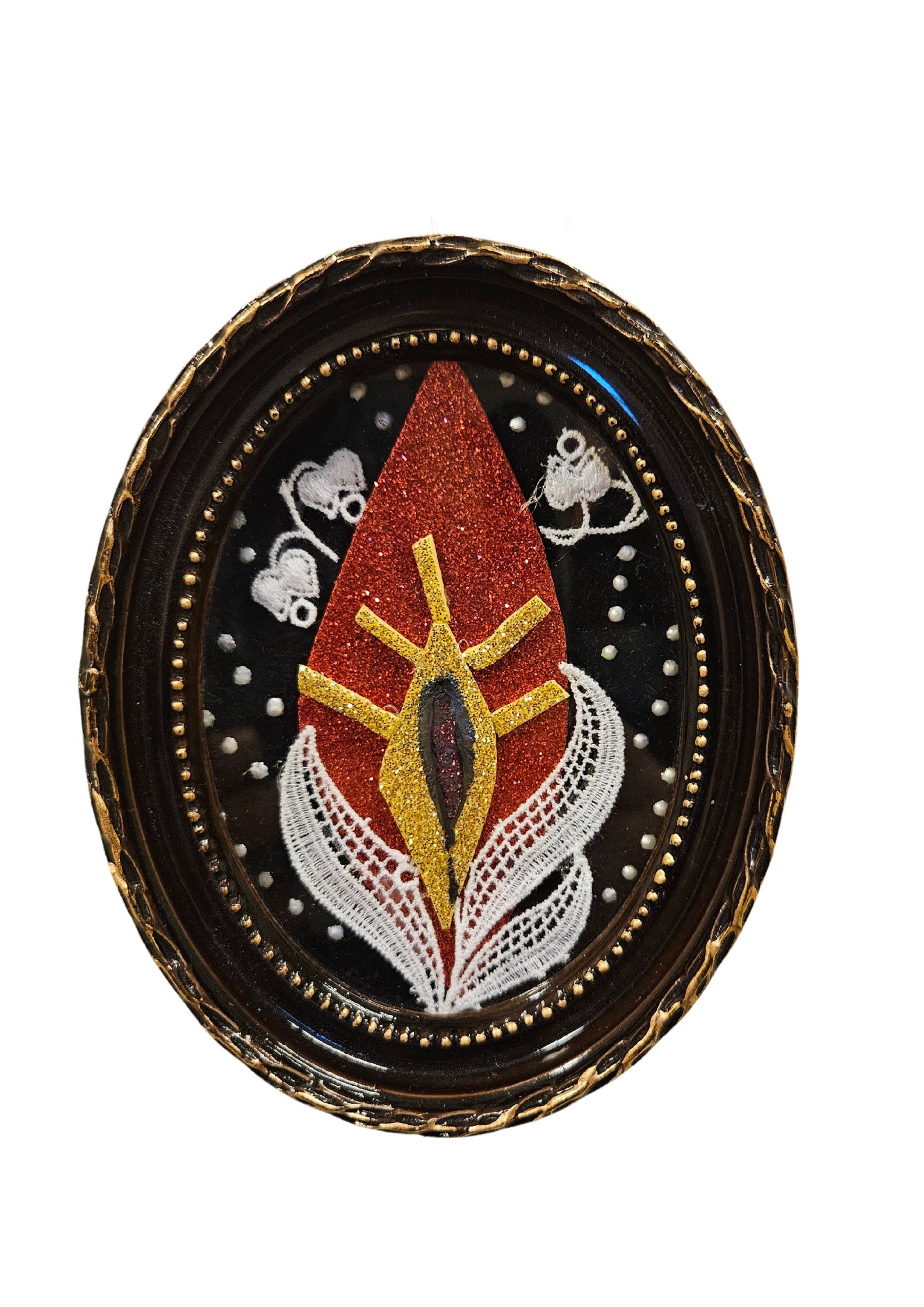
Teoksissani piirakka on muoto, ajatus ja materiaali. Valan satoja pieniä piirakoita, joista jokainen saa oman pintansa, värinsä ja luonteensa. Ne rakentuvat kierrätysmateriaaleista, tekstiileistä, karvasta, langoista, napeista, glitteristä ja löydetyistä esineistä. Yhdessä ne muodostavat eläviä pintoja, parvia tai portteja, joissa yksittäinen esine menettää merkityksensä ja muuttuu osaksi suurempaa organismia.
Piirakka-teokseni liikkuvat huumorin, käsityön ja tutkimuksen välissä. Ne kysyvät, mitä tapahtuu, kun kansanperinne ja feminismi kohtaavat toisensa, ja voisimmeko vielä oppia ajattelemaan kehoa vähemmän objektina ja enemmän elävänä yhteytenä luontoon, historiaan ja yhteiseen mielikuvitukseen.
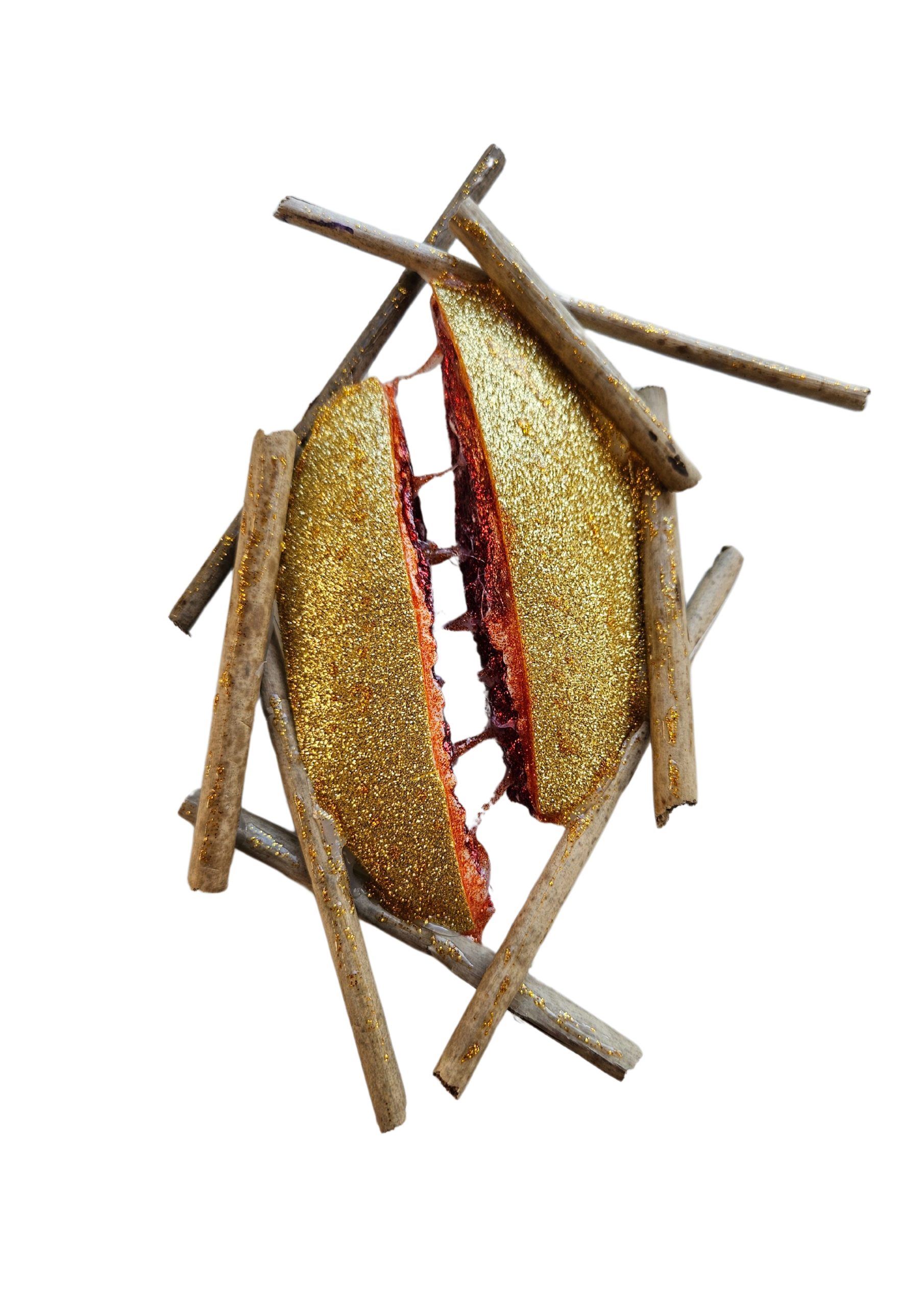
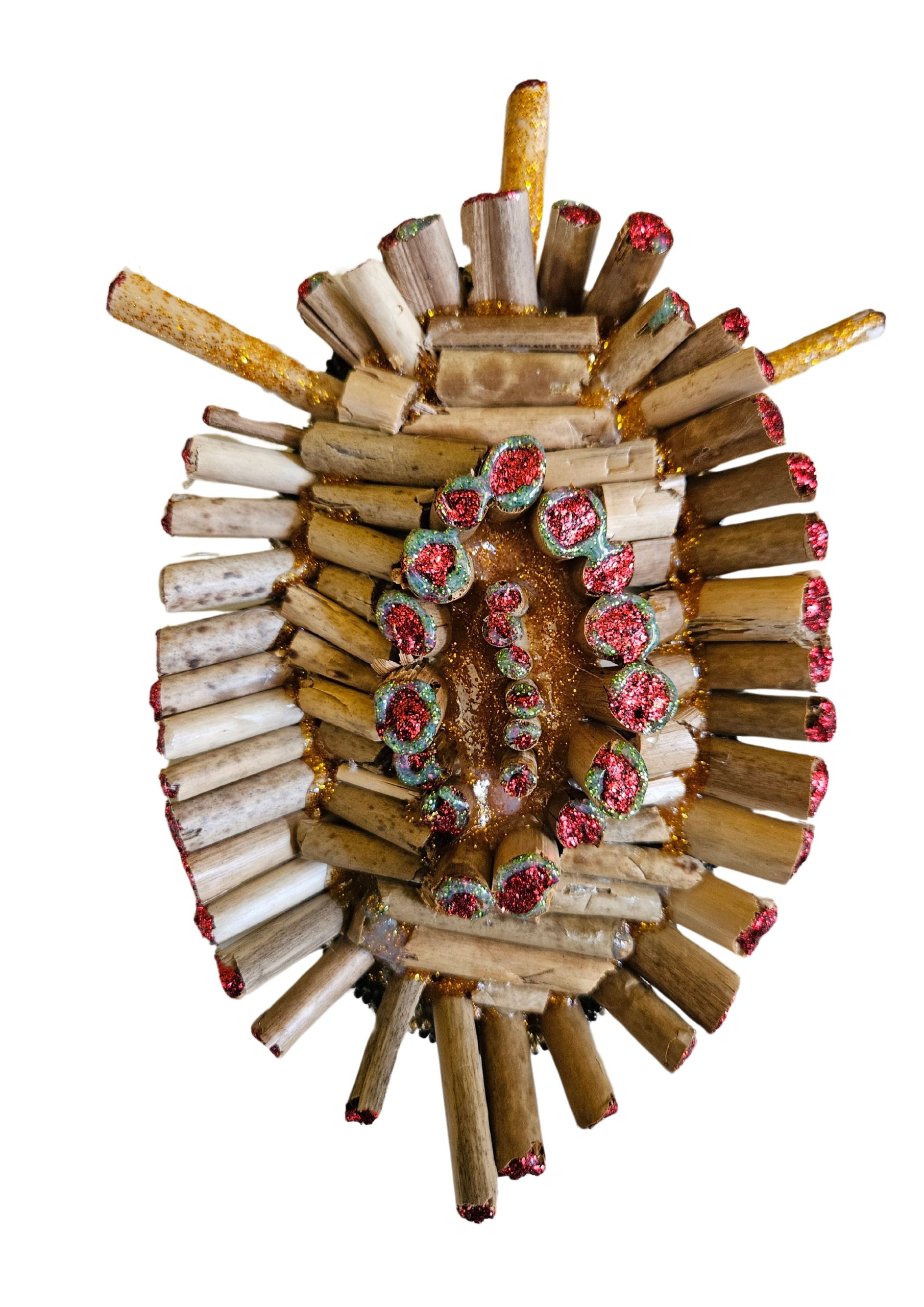
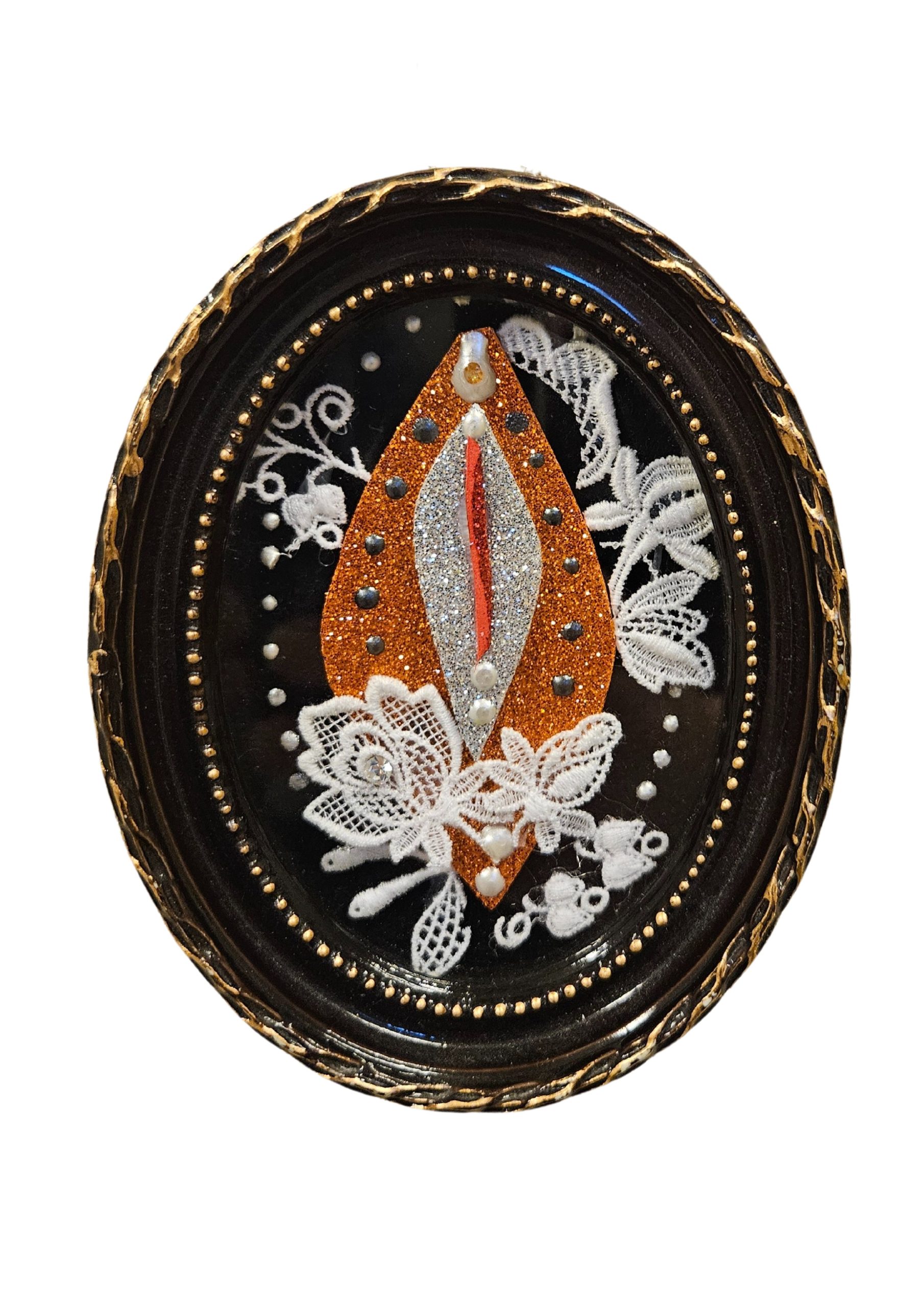
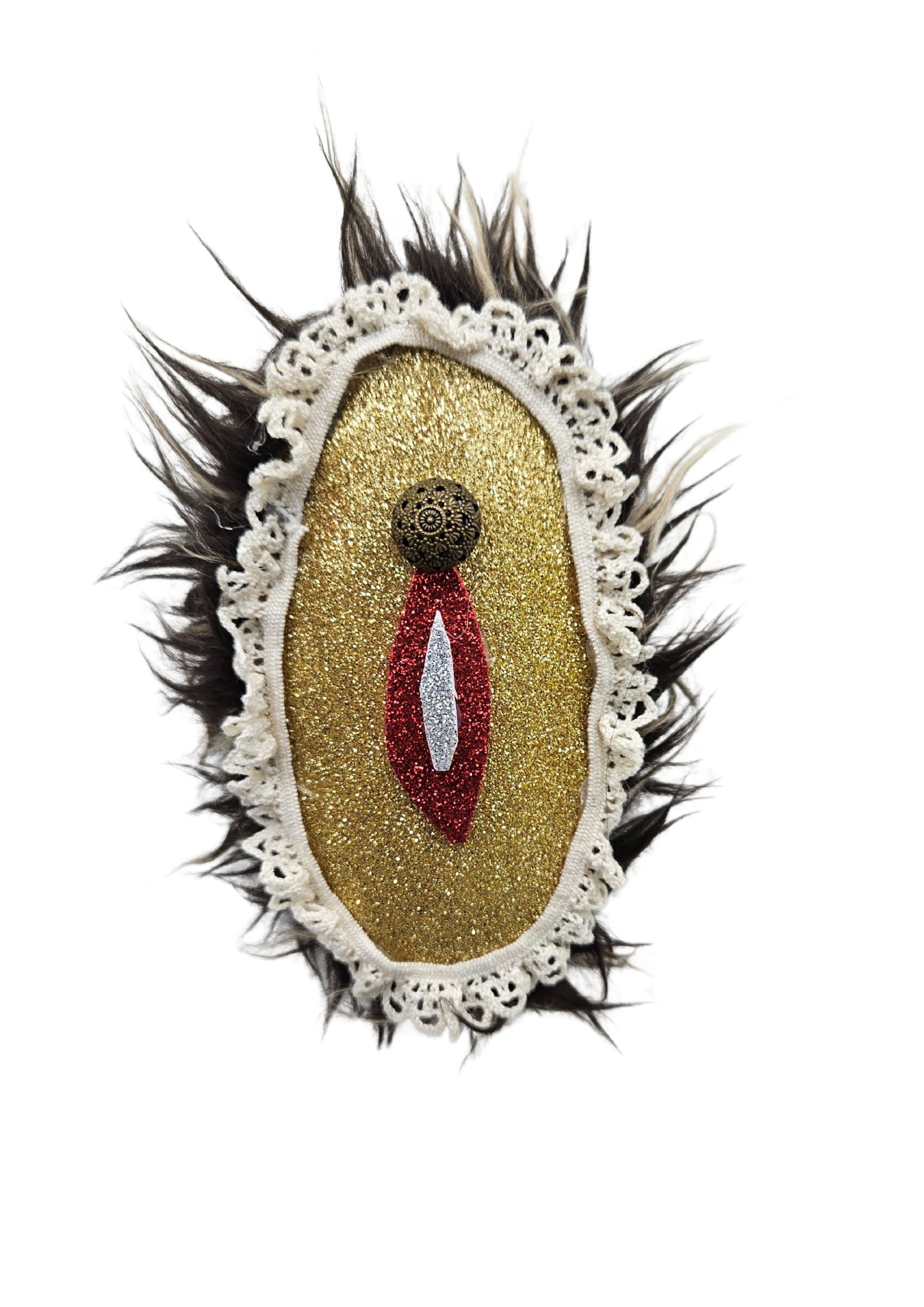
My Karelian Pie series grows out of an ongoing artistic inquiry into how folklore, myth, and cultural memory continue to shape the ways we understand the female body and its relationship with nature. I am fascinated by the idea that old beliefs never truly disappear. They survive in language, gestures, everyday objects, and domestic rituals, often disguised as humour or tradition.
In Finnish folk belief, the vulva was not primarily a symbol of sexuality but of life, protection, and transformation. It was understood as a threshold between worlds: feared, respected, and sacred all at once. It belonged as much to the forest as to the body itself, connected to fertility, invisible forces, and the rhythms of nature.
These ideas appeared in many ritual practices. In harakointi, people and animals were passed beneath a woman’s spread legs to receive protection, while pyllyttäminen involved exposing the vulva toward the forest or threatening forces as an act of power rather than shame. The female body was understood as something that could genuinely influence the world around it.
For me, the Karelian pie is one of the most subtle vulva symbols in Finnish culture. Its soft centre, folded edges, and generations of women’s hands that have shaped it carry stories of care, nourishment, shared labour, and embodied knowledge. I love the thought that one of Finland’s most ordinary foods may also preserve traces of an ancient cosmology.
In my work, the pie is no longer food but a form, a gesture, and a material language. I cast hundreds of small pie-like objects, each with its own texture, colour, and personality. Made from recycled materials, fabrics, threads, fur, buttons, glitter, and found objects, they gather into living surfaces, swarms, or portals where the individual object slowly dissolves into something larger than itself.
Glitter has never meant glamour to me. I see it in dew, on water, in ice, on skin, and in animal fur. It is nature’s way of being gloriously excessive. Fur reminds me that we have never stopped being animals, no matter how many museums, churches, or art institutions we build around ourselves.
My intention is not to sexualise the female body. I want to remember another way of seeing it: as landscape, ritual, and cosmology. Not an object to be looked at, but a living force capable of protecting, transforming, and connecting worlds.
The Karelian Pie works exist somewhere between humour, craft, and research. They ask what might happen when folklore meets feminism, and whether we can begin to imagine the body once again not as something to control, but as a living relationship with nature, history, and our collective imagination.
Auf Deutsch
Meine Werkserie Piirakka (Karelische Piroggen) ist Teil einer langjährigen künstlerischen Auseinandersetzung mit der Frage, wie Volksglauben, Mythen und kulturelles Gedächtnis unser Verständnis des weiblichen Körpers und seiner Beziehung zur Natur prägen. Mich beschäftigt der Gedanke, dass alte Vorstellungen niemals ganz verschwinden. Sie leben weiter – in unserer Sprache, in Gesten, in Alltagsgegenständen und Ritualen, oft verborgen hinter Humor oder Handwerk.
Im finnischen Volksglauben war die Vulva nicht in erster Linie ein sexuelles Symbol, sondern ein Ort des Lebens, des Schutzes und der Verwandlung. Sie galt als Schwelle zwischen den Welten – zugleich gefürchtet, verehrt und heilig. Sie war mit dem Wald, der Fruchtbarkeit und den unsichtbaren Kräften der Natur verbunden.
Diese Vorstellungen zeigen sich in zahlreichen Ritualen. Beim Harakointi wurden Menschen oder Tiere unter den gespreizten Beinen einer Frau hindurchgeführt, um Schutz zu erhalten. Beim Pyllyttäminen wurde die Vulva dem Wald oder einer bedrohlichen Macht entgegengestreckt – nicht als Geste der Scham, sondern als Ausdruck von Kraft. Der weibliche Körper wurde als handelnde, wirksame Kraft verstanden, die ihre Umgebung verändern konnte.
Für mich gehört die Karelische Pirogge zu den feinsten und zugleich selbstverständlichsten Vulva-Symbolen der finnischen Kultur. Ihre weiche Mitte, die gefalteten Ränder und die Generationen von Frauen, die sie gebacken haben, erzählen von Fürsorge, Gemeinschaft und verkörpertem Wissen. Mich fasziniert die Vorstellung, dass eines unserer alltäglichsten Lebensmittel zugleich Spuren einer uralten Weltsicht in sich trägt.
In meinen Arbeiten wird die Pirogge zu einer Form, einer Geste und einer materiellen Sprache. Ich gieße Hunderte kleiner Piroggenformen, jede mit eigener Oberfläche, Farbe und Persönlichkeit. Aus recycelten Materialien, Stoffen, Fäden, Fell, Knöpfen, Glitter und Fundstücken entstehen lebendige Oberflächen, Schwärme oder Portale, in denen das einzelne Objekt Teil eines größeren Organismus wird.
Glitter bedeutet für mich keinen Glamour. Ich sehe ihn im Morgentau, auf Wasser, im Eis, auf der Haut und im Fell von Tieren. Er ist die Art der Natur, für einen Augenblick verschwenderisch zu sein. Fell erinnert mich daran, dass wir nie aufgehört haben, Tiere zu sein – ganz gleich, wie viele Museen, Kirchen oder Kunstinstitutionen wir errichten.
Ich möchte den weiblichen Körper nicht sexualisieren. Mich interessiert eine ältere Vorstellung von ihm: als Landschaft, als Ritual, als Teil einer kosmologischen Ordnung. Nicht als Objekt des Blicks, sondern als lebendige Kraft, die schützen, verwandeln und Welten miteinander verbinden kann.
Meine Piirakka-Arbeiten bewegen sich zwischen Humor, Handwerk und Forschung. Sie fragen danach, was geschieht, wenn Volksglauben und Feminismus einander begegnen – und ob wir den Körper wieder als lebendige Verbindung zu Natur, Geschichte und unserer gemeinsamen Vorstellungskraft begreifen können.